Is Your Heat Pump Supposed to Do That? Normal Winter Behavior vs. Real Problems in Northern Virginia Homes
Jason Goldsberry
Oct 27 2026 13:00
Heat pumps often produce steam during defrost, pause briefly as they change modes, and deliver air that feels warm rather than furnace-hot. Longer, steadier heating cycles can also be normal on cold days. However, persistent ice, nonstop operation without holding the set temperature, and constant auxiliary heat are signs worth checking.
For homeowners across Sterling communities including Cascades, Countryside, and Sugarland Run—as well as Fairfax and Arlington neighborhoods such as Ashton Heights and Lyon Village—winter heat-pump behavior can be confusing. The DMV’s damp, near-freezing mornings create conditions where a properly working system may look or sound different from a conventional furnace.
Why Heat-Pump Heat Feels Different From Furnace Heat
A furnace creates heat by burning fuel or using electric resistance elements, so the air coming from its registers often feels very hot. A heat pump works differently: A heat pump produces heat by reversing the refrigerant cycle, absorbing heat from the outside air. Even when it is cold outdoors, there is usable heat energy available for the system to transfer indoors.
Because it transfers heat rather than generating it through combustion, a heat pump typically supplies air that is comfortably warm but not scorching. It may feel less dramatic at the vent, yet it can still keep the home comfortable. Heat pumps, dual-fuel systems, ductless mini-splits, and multi-stage or variable-speed equipment are designed to operate in longer, steadier cycles to maintain an even indoor temperature.
Advantage Service Group services Carrier, Trane, Lennox, Daikin, Mitsubishi, Rheem, Goodman, and other major brands, so the team can help distinguish normal operation from a problem specific to your equipment.
Normal Winter Behavior
Cold, damp weather can make normal heat-pump operation more noticeable. The key is whether the system returns to normal operation, clears frost, and continues maintaining a comfortable indoor temperature.
Steam or Smoke During Defrost
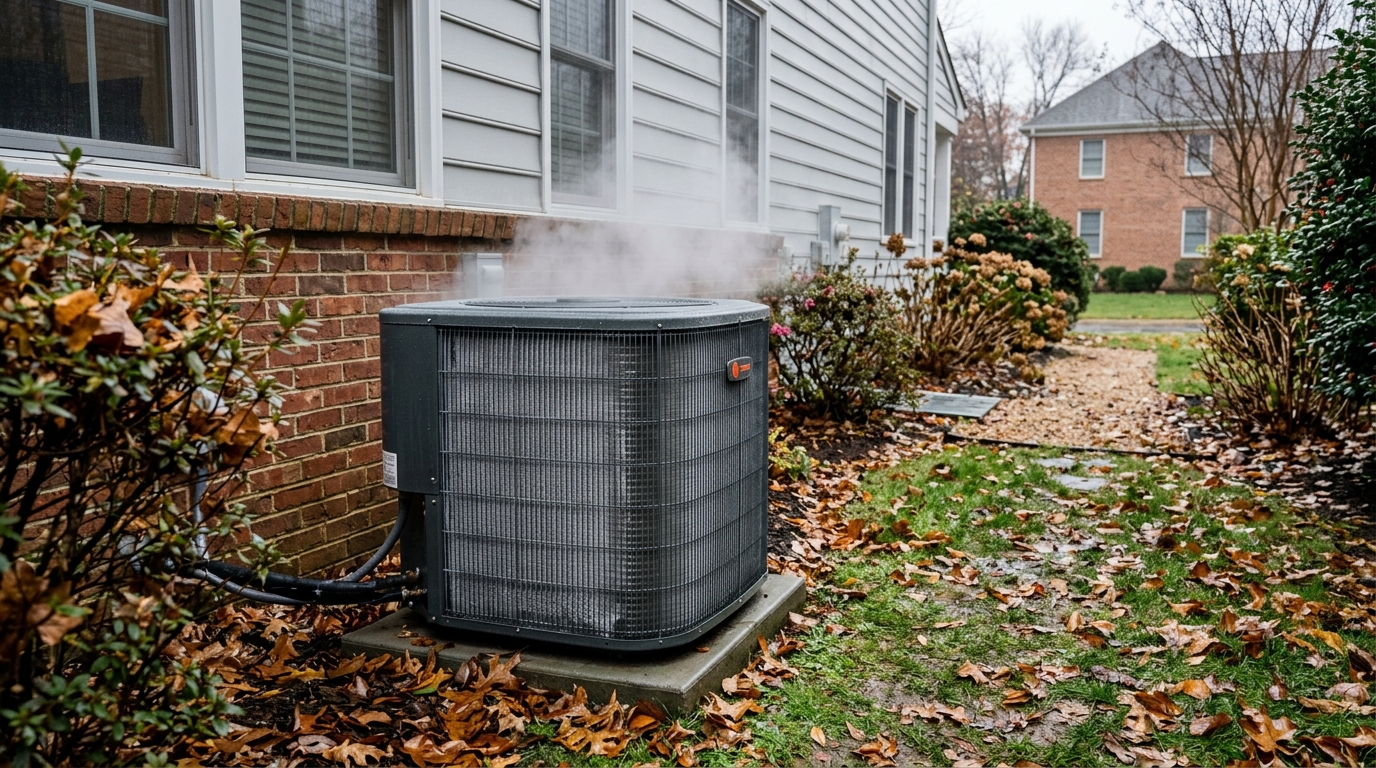
When outdoor temperatures hover near freezing, moisture can collect and freeze on the outdoor coil. Your heat pump periodically enters a defrost cycle to melt that buildup. Seeing a cloud of steam rise from the outdoor unit during this process is usually normal. It can look like smoke, but it is commonly water vapor meeting cold air.
A Whoosh or Pause From Reversing-Valve Operation
A brief whoosh, change in airflow, or short pause can occur when the reversing valve shifts the system into or out of defrost mode. The outdoor fan may stop temporarily while the unit completes the cycle. Once defrost is finished, the system should return to normal heating.
Light Frost That Clears
A thin, even layer of frost on the outdoor coil can be expected during cold, humid mornings. A working defrost cycle should clear it. The outdoor unit does not need to remain perfectly dry throughout winter, but it should not become encased in ice.
Aux Heat on Very Cold Mornings
Aux Heat may appear on the thermostat when outdoor temperatures dip sharply or when the system needs help recovering from a small temperature change. This backup heat is intended to support the heat pump under demanding conditions. Occasional use on especially cold mornings is not automatically a reason for concern.
Repair Warning Signs
Some symptoms point beyond ordinary winter operation. If you notice these issues, it is a good time to arrange heat pump and heating repair rather than guessing at the cause.
- Thick ice that will not clear: Frost is one thing; heavy ice covering the coil, fan area, or base of the unit is not. This may indicate a defrost, drainage, airflow, or refrigerant-related issue.
- Outdoor fan failure: If the fan does not run when it should, or the unit appears to struggle through defrost, the system needs professional attention.
- Grinding or rattling: Unusual mechanical noises can signal a loose component, fan problem, motor issue, or other repair need.
- Constant auxiliary or emergency heat: Backup heat is more expensive to operate. If it runs constantly, especially in moderate winter weather, your heat pump may not be carrying its intended share of the heating load.
- Failure to reach the setpoint: A long cycle can be normal, but running continuously without maintaining the thermostat setting is not.
- Continuous cold air: Supply air may feel milder than furnace heat, but it should not feel persistently cold while the system is calling for heat.
ASG provides 24/7 service when a heating concern cannot wait, including for homes with conventional heat pumps, dual-fuel setups, ductless systems, and variable-speed equipment.
Why Thermostat Settings Matter
Thermostat programming has a major effect on heat-pump efficiency. Large temperature setbacks can cause the system to call for backup heat while trying to recover quickly. In some homes, thermostat lockouts, wiring issues, or incorrect system configuration can also force costly auxiliary or emergency heat to operate more often than necessary.
A modest, stable setting is often the most efficient approach for a heat pump. Advantage Service Group installs and configures Ecobee thermostats for heat-pump systems, helping homeowners use compatible settings and staging strategies. If your thermostat is frequently showing Aux Heat, scheduling an Ecobee thermostat installation
assessment can help identify whether the issue is programming, wiring, configuration, or the heating system itself.
Safe Homeowner Actions
There are a few simple steps you can take before requesting service. Keep snow, leaves, and other debris away from the outdoor unit, and watch for roof drip that may freeze around or onto the equipment. Replace a dirty indoor air filter on schedule, since restricted airflow can affect comfort and system performance.
Do not chip at ice with tools, pour hot water on the unit, or cover the outdoor equipment. These actions can damage delicate coil fins, wiring, and moving components. If ice is heavy or keeps returning, leave the unit alone and have it evaluated by a technician.
For dependable HVAC service in Sterling and throughout the surrounding DMV, a quick diagnostic beats guessing during a cold snap. Advantage Service Group explains what is happening and whether attention is truly needed. Call ASG at (703) 914-3601.